
Ramaphosa reiterates government’s shift from consumption to investment
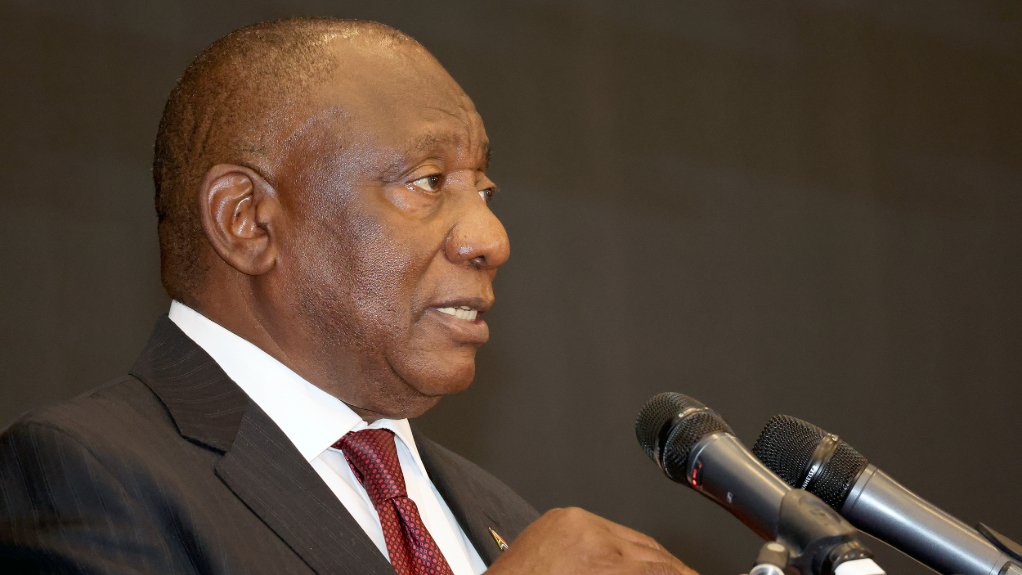
President Cyril Ramaphosa has reiterated government’s strategic shift in government spending during his address at the 2025 National Construction Summit in Ekurhuleni, on November 13, promising the prioritisation of long-term investment over consumptive social spending and subsidies.
“We are shifting the composition of spending from consumption to investment. Capital payments are the fastest-growing expenditure item on our national Budget. They are expected to increase to about 7.5% over the medium term,” Ramaphosa said.
“Infrastructure investment is one of the most effective levers for stimulating economic growth. This is evident in the statistics that we have just seen earlier this week. The Quarterly Labour Force Survey indicates a decrease in the official unemployment rate from 33.2% in the second quarter of this year to 31.9% in the third quarter, and long may this continue.
“Construction was the biggest contributor and this gives us hope. This gives us the ability to look forward to greater growth in this industry,” he said.
Ramaphosa said that, by investing in infrastructure and capital projects rather than expanding consumption-based programmes, the government aims to stimulate sustainable economic growth and create employment opportunities, whereby infrastructure can become the “flywheel” for broader development.
He highlighted that more than 250 fully funded infrastructure projects, valued at more than R250-billion were already under way, covering water, energy, transport and digital networks.
Moreover, Ramaphosa highlighted the medium-term R1-trillion commitment by government – announced in May – to support infrastructure development.
Alongside public investment, Ramaphosa noted the importance of enabling private-sector participation. He noted amendments to public–private partnership regulations and guidelines for unsolicited bids, which were designed to encourage businesses to propose innovative infrastructure projects, which, if financially viable, would be approved for construction.
Source: Engineering news



 English
  Chinese